Safety first on the new line
When building our city's youngest metro line, the developers effectively put in place a completely new metro system. That is not so strange in itself, because the metro network was built from the 1970s onwards and safety requirements have of course been tightened considerably in the forty years since. With these new insights on safety in its back pocket, the GVB has since tackled all the other lines as well.
Driving on to a safe place
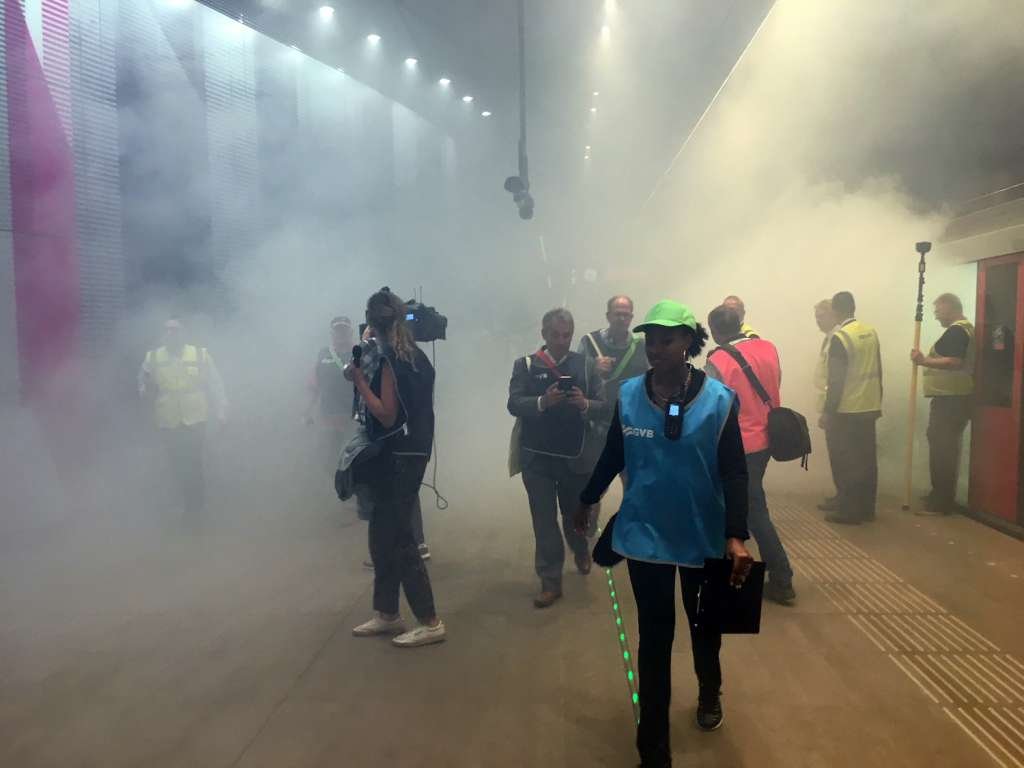
But what to do if things go wrong after all? At its core the safety system comes down to self-reliance, but supported by things like fire prevention in the way the stations are built and special installation techniques. For example, a lot of fire-retardant material was used in the stations, and the decision was made not to build any shops on the platforms. If something does go wrong, the metro driver will drive on to a safe place so that he does not have to stop in the tunnel, and from the station passengers follow the various escape routes as quickly as possible. All this because escaping and evacuating from a station is of course less complex than from the tunnel.
Curious about the details of how safety is arranged on the North/South line? Then read this article in Vakblad Veiligheid.