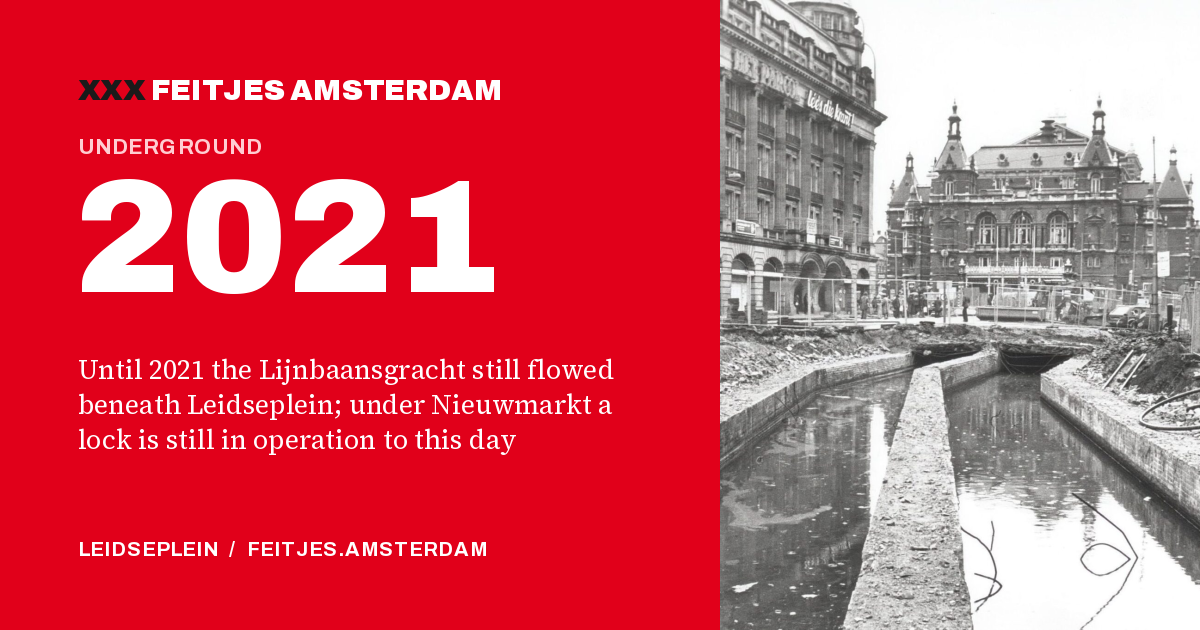
You probably never noticed it when you were on Leidseplein, but until early 2021 a stretch of the Lijnbaansgracht (gracht = canal) still ran underneath the Kleine-Gartmanplantsoen there. It is a type of construction you come across in several places in Amsterdam, and it is an alternative to filling in the water completely. The technical term for it is overkluizen, or vaulting over. On Leidseplein an underground bicycle garage has since opened, which put an end to the flow of water there, but Muntplein and Nieuwmarkt, for example, are also built right over the water.
So a busy traffic junction is actually a bridge
Muntplein is a fine example of vaulting over. Here an enormous bridge was built over the Singel and the Binnen Amstel, so cleverly that you hardly notice it when you come driving in from the Rokin or the Vijzelstraat. And those are only two of the seven streets that open onto the square, by the way. The Singel, the Reguliersbreestraat, the Amstel, the Kalverstraat and the Nieuwe Doelenstraat are also part of this giant crossroads. And the water babbles merrily along beneath the thousands of passers-by every day. We have also written a more detailed article about Muntplein.
An underground lock beneath Nieuwmarkt
Perhaps you have already spotted this one: an entrance to the Bijleveldschesluis (sluis = lock) on the Wallen side of Nieuwmarkt. This is where the water of the Geldersekade flows into the Kloveniersburgwal. But that water emerges from beneath Nieuwmarkt through so-called 'duikers' (culverts). Level with the Waag is the actual lock, which is still in regular use. When the water in the IJ gets too high, the lock can be closed to protect the canals further along. The culverts were modified in 1990 during a reconstruction of Nieuwmarkt.